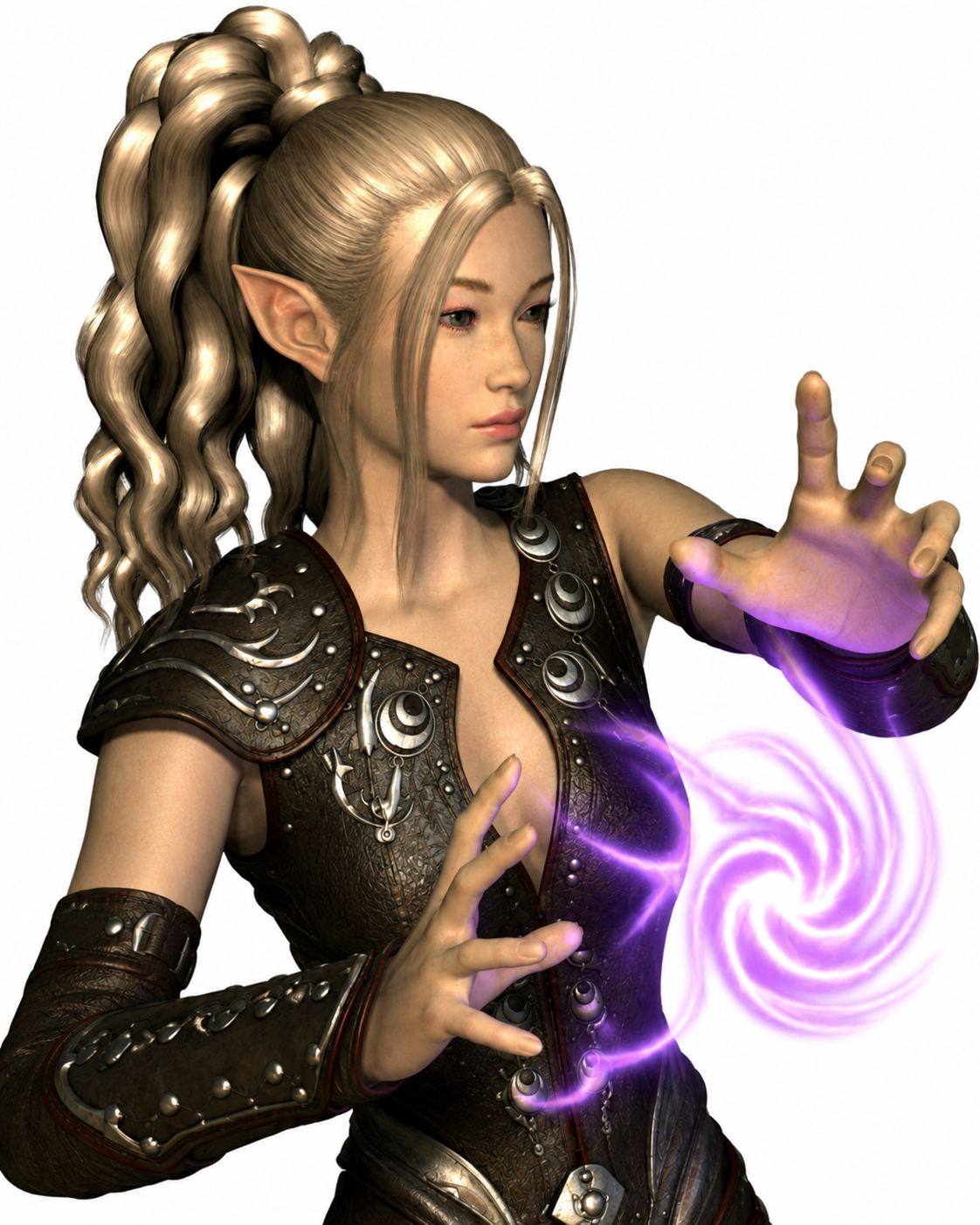
Transform the provided image into a deliberately old-fashioned late-1990s to early-2000s 3D character render.
IMPORTANT: Preserve the original subject, identity, facial proportions, hairstyle, clothing, accessories, pose, body proportions, camera direction, and overall composition from the source image.
Do not redesign the character. Do not replace the outfit. Do not change the person. This is primarily a rendering-style conversion.
TARGET ERA AND FEEL:
The final image should look like a genuine promotional CGI character render created roughly between 1998 and 2004.
It should feel technically limited, synthetic, slightly stiff, and unmistakably computer-generated.
Do NOT interpret this as: a modern polished CGI render, a modern fashion render, a photorealistic 3D portrait, or a modern render with a retro filter.
The image should feel like it was originally created using older 3D rendering technology.
The result may still be attractive and stylish, but it should not feel luxurious, silky, hyper-refined, cinematic, or technologically modern.
GEOMETRY:
Keep the overall geometry reasonably smooth.
The character should NOT look intentionally low-poly.
Use smooth normals and interpolated shading.
Do not expose individual polygon faces.
Do not create visible triangular facets across the skin.
Do not create tessellation-like geometric patterns.
The silhouette should remain smooth and readable.
The facial structure may be slightly simplified and sculpted, but the surface should feel continuous rather than visibly faceted.
The retro quality must come mainly from shading, textures, materials, and hair construction, NOT from visible polygon triangulation.
VERY IMPORTANT: The geometry should remain relatively smooth, but the rendering must feel older, rougher, and less refined. Do not show visible polygon facets or triangular patches. However, do NOT make the image sleek, silky, polished, or beauty-rendered.
FACE AND SKIN:
Use synthetic early-CGI skin that is smooth in shape but not luxurious in finish.
The skin should be: - artificial - slightly dry-looking - slightly waxy - somewhat flat - mildly airbrushed - low in micro-detail - a little coarse in texture response - less polished than modern CGI skin
The skin should not look soft, creamy, glassy, silky, or cosmetically perfect. It should feel like older CG skin made with simpler shaders and texture maps.
FACIAL SHADING:
Use relatively simple facial lighting.
Allow the nose, brow, cheekbones, lips, and jaw to read clearly, but avoid overly soft modern cinematic shading.
The shadows should feel slightly blunt and digitally calculated.
Use a subtly old-fashioned CG lighting response.
Do not create triangular patches on the cheeks, forehead, jaw, or nose.
Do not use posterized polygon shading.
Do not create obvious stepped lighting artifacts.
HAIR:
Render the hair as old CGI hair with strongly grouped, sculpted clumps.
Use: - large grouped sections - chunky hair clumps - sculpted hair masses - simplified texture detail - stiff, deliberate styling - less natural strand behavior - broader and less realistic highlights - slightly plastic or shell-like surface response
Keep them graphic and slightly simplified. Avoid individually simulated ultra-fine hairs.
EYES:
The eyes may be clear and glossy, but should remain slightly artificial. Use simple reflective highlights and restrained realism. Avoid extremely wet, ultra-realistic eyeballs.
LIPS:
Keep the lips smooth and digitally shaded. Use restrained highlights. Avoid hyperreal texture detail.
MATERIALS:
All materials should feel like older and simpler 3D materials.
Use: - primitive diffuse shading - limited material complexity - slightly rough texture maps - broader, less elegant highlights - basic reflections - less refined surface response - slightly dry or plasticky materials - simplified tonal separation
The materials should not behave like modern physically-based PBR shaders.
Avoid: - modern beauty lighting - cinematic rim lighting - dramatic HDRI environments - volumetric lighting - filmic lighting - advanced global illumination - luxurious soft lighting
BACKGROUND:
Use a pure solid white background. Color: #FFFFFF.
No gradient. No floor. No horizon. No environment. No scenery. No cast shadow. No contact shadow. No vignette.
COMPOSITION:
Preserve the original composition as much as possible. Keep the subject comfortably inside the frame. Do not unintentionally crop important parts of the subject. Maintain clean white negative space around the subject where appropriate.
CAMERA:
Preserve the perspective of the source image. If the original pose uses foreshortening, keep it. Avoid modern cinematic depth of field. Keep most of the subject clearly readable.
OVERALL VISUAL GOAL:
The final image should resemble an early-2000s game promotional character render or experimental fashion CGI image.
The visual language should include: - smooth but synthetic skin - outdated shader response - slightly dry or waxy face - chunky sculpted hair - simplified materials - broader, duller highlights - slightly blunt digital lighting - limited texture complexity - attractive but unmistakably artificial computer-generated beauty - subtle technological limitation - clean white promotional-image presentation
The result should feel genuinely old, not artificially distressed and not retro-filtered.
FINAL STYLE PRIORITY:
Smooth geometry, rougher rendering.
Do not make the polygons visible.
Make the old-fashioned feeling come from primitive shaders, simple textures, broader duller highlights, plastic or slightly dry skin, chunky hair, limited reflections, and slightly stiff lighting.
The result should look like genuine early-2000s CGI, not modern CGI with retro styling.